
Architectural Trade-Off Analysis

Dedicated vs Flexible Use

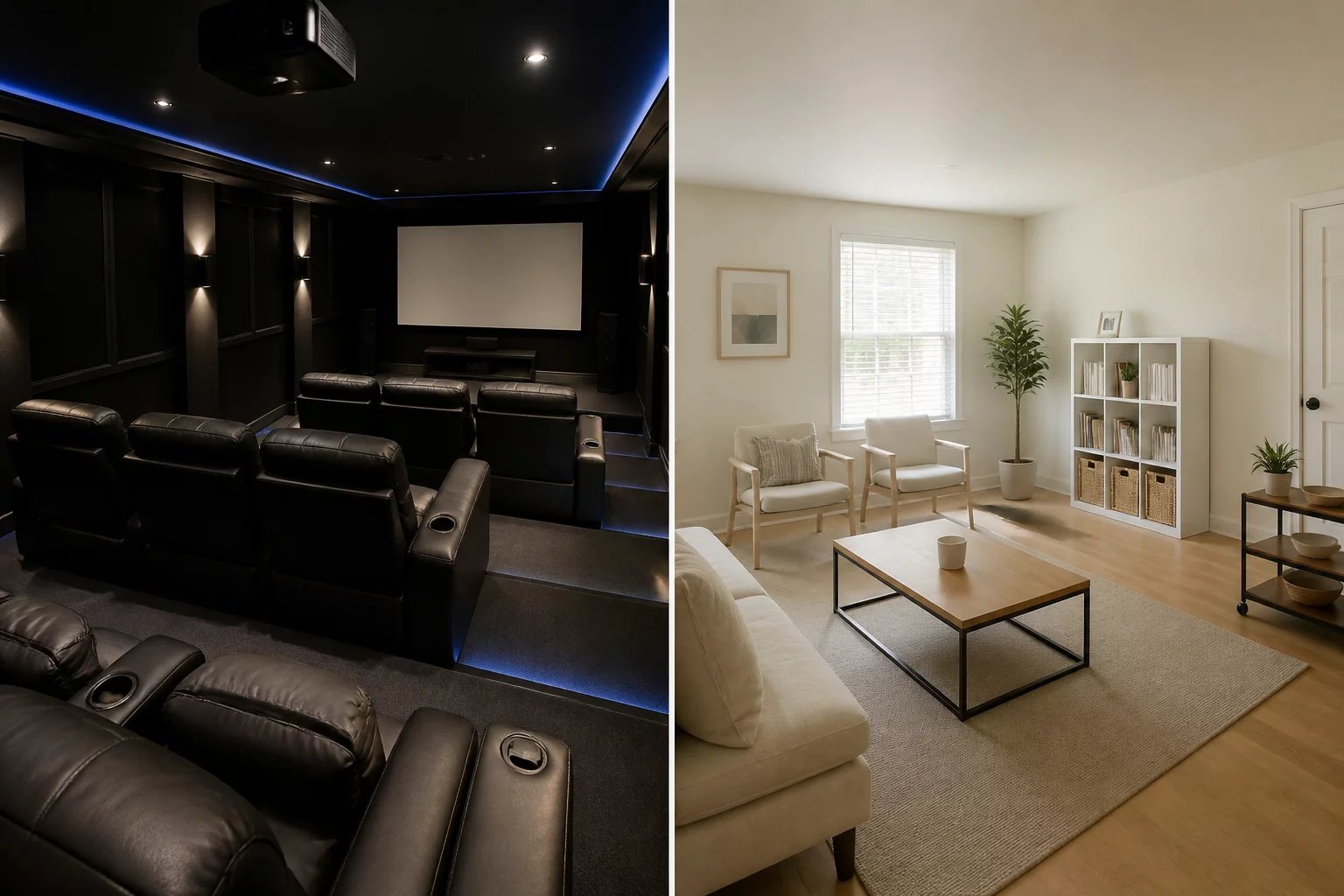
Weighing the specialized perfection of dedicated single-purpose rooms against the day-long adaptability and space utilization of multipurpose layouts.

Dedicated vs Flexible Use Spatial Diagram
Comparative Dimension Schematic

Decision Rationale & Household Context

Depends on the frequency of the specialized activity. When an activity occurs daily and requires specific equipment setups, dedicating a room prevents friction and improves performance. Conversely, if the specialized function is occasional, flexibility keeps the square footage active and prevents entire zones of the home from sitting idle for days at a time.

Structural Breakdown

Layout Configurations Side-by-Side

A

Dedicated Single-Purpose Allocation

Tailored Equipment / Maximum Task Depth
Strategy A
Direct Gains & Advantages

Perfectly optimized for one specific task (e.g., watching movies). Fixtures, lighting, acoustic paneling, and seating angles are tuned exclusively for peak comfort without compromising on generic requirements.

Inherent Trade-Offs

The room sits empty when that specific task is not occurring. This locked footprint reduces usable square footage for everyday routines and limits household flexibility during shifting life stages.

Task Specialization Score 9.6 / 10 Focus
B

Flexible Multipurpose Allocation

Dynamic Utility / High Daily Circulation
Strategy B
Direct Gains & Advantages

Space is utilized constantly throughout the day for various needs. The room transitions from a morning fitness zone to a quiet afternoon remote workspace or an evening guest retreat with minimal physical adjustments.

Inherent Trade-Offs

Never provides a premium experience for any single activity. Constant setup or teardown friction disrupts focus, and acoustic treatments or dedicated hardware cannot be permanently anchored.

Utilization Efficiency Score 9.3 / 10 Utility
Interactive Helper

Which Spatial Factor Matters More to You?

Adjust the slider below to balance your daily routine requirements between specialized immersion vs around-the-clock room utilization.

Dedicated Priority Balanced (50/50) Flexible Priority
Recommendation: Consider hybrid modular layouts with collapsible partitions or dual-purpose mobile furniture units.

Evaluating Room Specialization Versus Multi-Use Flexibility

Dedicated rooms deliver optimized ergonomics for their intended function but sit vacant for the majority of the day. Flexible spaces maximize utilization but require compromise setups that serve no single function at full efficiency.

When designing an adaptable room, the key is keeping transition overhead minimal. If setting up a desk or unfolding a bed takes more than two minutes of physical effort, occupants inevitably stop converting the room and it freezes into an awkward semi-dedicated state.

Specialization and Flexibility Checklist:

  • Calculate actual usage hours per function — a room used fewer than 4 hours daily is a candidate for multi-use conversion.
  • Ensure flexible room transitions can be completed in under 5 minutes; longer setup times discourage actual use changes.
  • Verify that storage for each function mode is independently accessible without moving furniture from another mode.

Field Discussions & Layout Feedback

0 Contributions
No field observations posted yet. Be the first to leave a comment on this spatial configuration.

Submit Field Observations

Share spatial measurements or functional trade-off notes for this case.

5 / 5 Stars
Verified Architectural Reference