
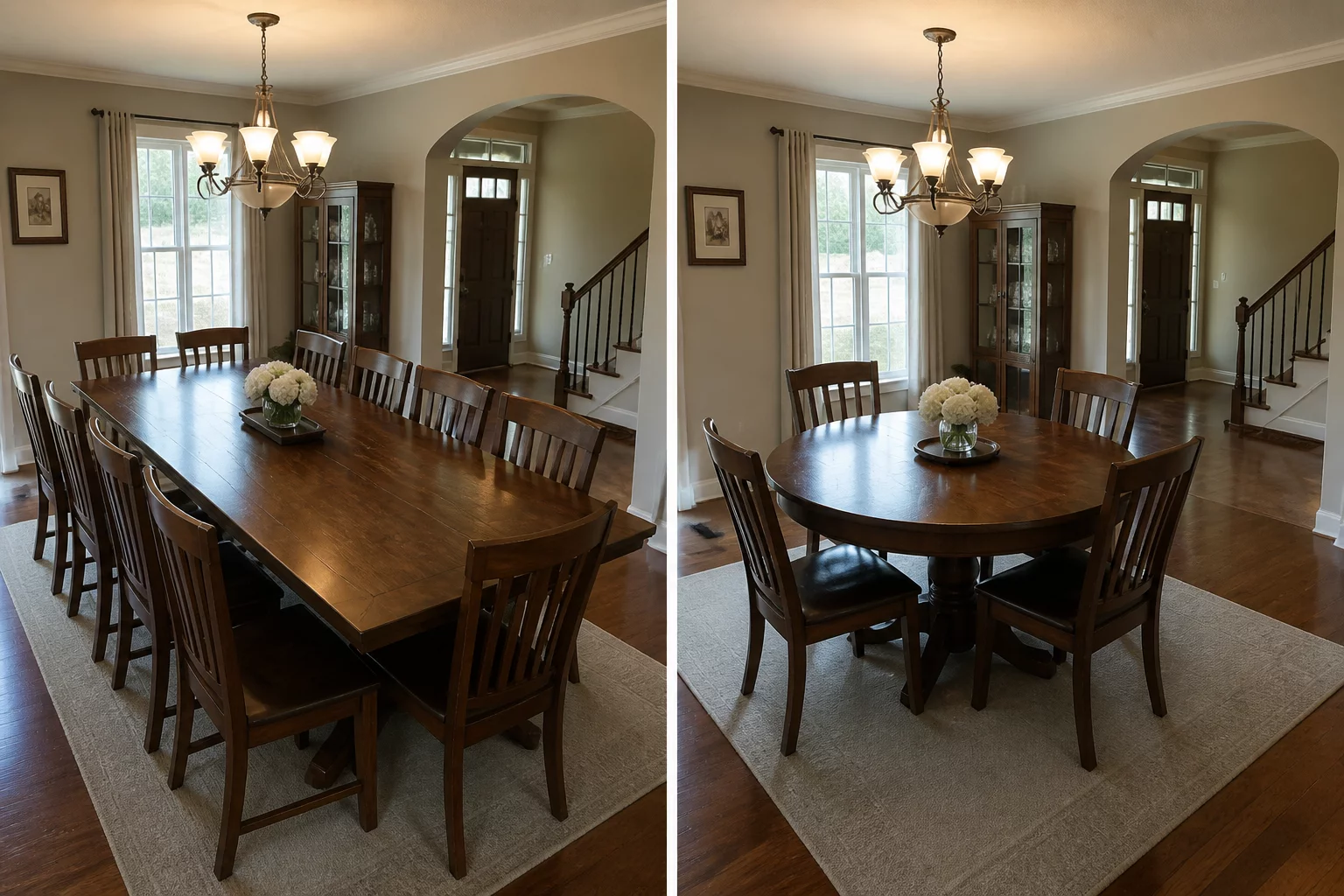
Evaluating Long-Term Spatial Ergonomics and Lifestyle Rhythms
Selecting between substantial, fixed-dimension furnishings and adaptable modular systems represents a fundamental decision about everyday room behavior. Monolithic dining tables, deep sectional sofas, and dedicated multi-seat workbenches establish an immediate, comforting sense of permanence. In contrast, adaptable furniture offers spatial elasticity, transforming a quiet home office into an active workout zone or dinner party setup within minutes.
The trade-off hinges on human friction. While convertible pieces unlock versatile square footage in compact layouts, their utility relies on how frequently household members are truly willing to shift, extend, or tuck away structural components in daily life.
Key Spatial Checklist Before Selecting Scale vs Modularity:
- Measure maximum perimeter clearances in both fully collapsed and fully extended configurations.
- Evaluate daily operational frequency to determine if manual furniture transformations cause routine friction.
- Verify storage allocations for ancillary components such as extra dining leaves, nested stools, or foldaway bases.
- Assess the visual weight of heavy monolithic silhouettes against room daylight distribution and open lines of sight.