Large Windows vs Wall Space
Evaluating panoramic daylighting, thermal envelope exposure, and outdoor connectivity against the loss of vertical furniture mounting zones and interior artwork placement.
Primary Gains
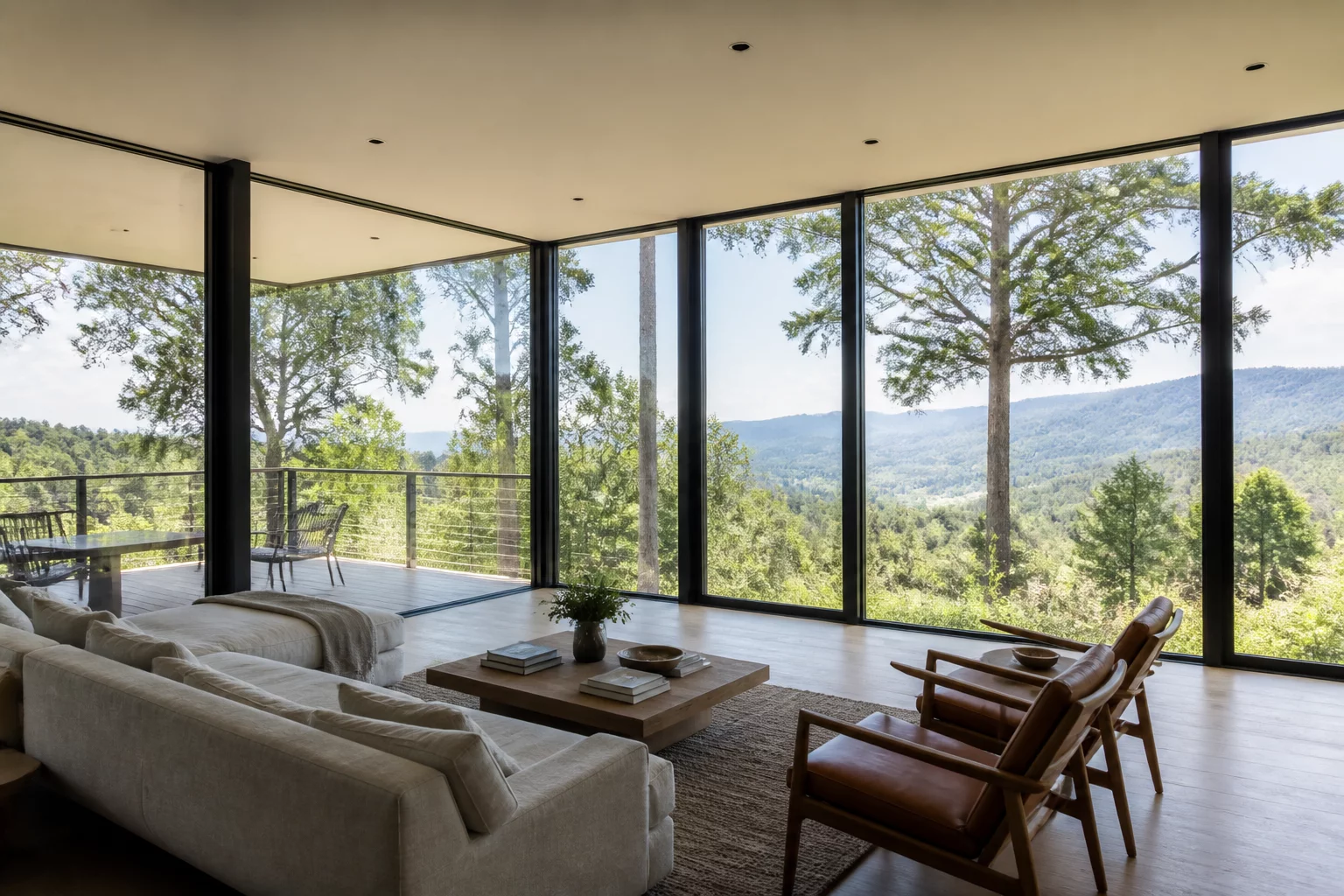
Incredible natural light and connection to the outdoors.
Necessary Compromises
Nowhere to place large furniture pieces or hang artwork.
Ergonomic Context and Structural Realities
Expansive glazing transforms the psychological sensation of an interior space by eliminating visual barriers between inside and outside. Expansive window walls harvest daylight across changing seasons, drastically reducing the demand for artificial ambient illumination during daylight hours.
However, removing solid drywall structures simultaneously eliminates perimeter mounting planes. Tall bookcases, media storage consoles, display credenzas, and substantial framed art require uninterrupted structural backing. When vertical surfaces are replaced with floor-to-ceiling glass, furniture must pull inward toward the center of the room, requiring wider circulation corridors around floating islands and seating clusters.
Key Layout Clearance Recommendations
- Reserve at least one full wall segment of 120 cm or more for furniture backing in window-heavy rooms.
- Ensure window sill heights of at least 45 cm permit low furniture placement without obstructing glass.
- Plan electrical outlets on window-free wall sections before finalizing furniture layouts.
Spatial Analysis Perspectives
Extensive glazing reduces available wall length, forcing furniture into the center of rooms. This can improve circulation around pieces but may create floating, unanchored arrangements that feel less settled.
Community Discussions & Trade-Off Reviews
Real experiences and feedback on this architectural trade-off
No comments recorded yet. Be the first to share your spatial experience below.
Share Your Spatial Experience
Have you chosen or lived with this layout compromise? Add your insights below.